 By Graham Fisher
Updated November 2026
A fountain outdoor garden sale can turn a plain yard into a calm, sound-filled retreat, but sale tags alone don’t tell you whether a fountain will suit your space or last a season. This guide shows you how to judge a fountain’s size, pump, materials and power source so you can buy with confidence. By the end, you’ll have a checklist for comparing sale fountains side by side and a plan for placing your purchase.
Step 1: Decide Where the Fountain Will Live
Start with the spot, not the shopping cart. A fountain that looks perfect in a product photo can overwhelm a small patio or disappear against a tall hedge. Walk the area you have in mind at different times of day and note sun exposure, wind, and how close you can get an outlet or solar panel.
Shopping for one? See our guide: 6 Best Solar Powered Outdoor Garden Fountains for Every Yard (2026).
Use these measurements as a starting point:
- Patio or courtyard: Keep the fountain’s footprint under about one-third of the seating area’s width so people can still move around it.
- Small bed or corner: Look for tiered or wall-style designs with a base under roughly 18 inches across.
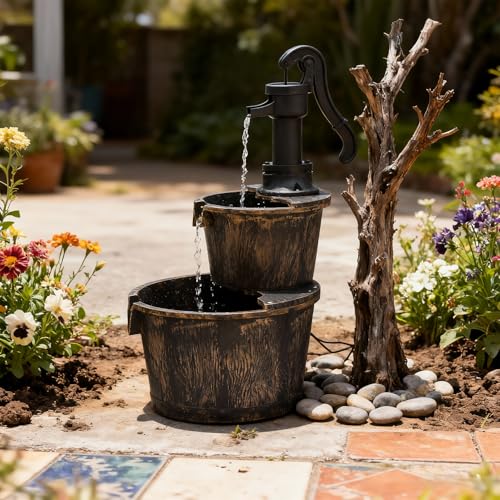
- Open lawn or large border: A pedestal or multi-tier fountain between 3 and 5 feet tall gives the visual weight needed to anchor the space.
If you’re deciding between styles, our guide to Garden Heritage Garden Fountain: How to Choose, Site and Style One walks through site-matching for different garden looks.
Step 2: Match the Fountain to Your Power Source
Sale fountains come in three main power types, and each changes where you can place them:
| Power type | Best for | Main limitation |
|---|---|---|
| Corded electric (120V outlet) | Patios near a GFCI outlet, steady flow | Needs an outdoor-rated outlet and a safe cord route |
| Solar-powered | Sunny beds with no nearby outlet | Output drops on cloudy days and in shade |
| Battery or low-voltage | Small displays, flexible placement | Shorter run time; batteries need replacing |
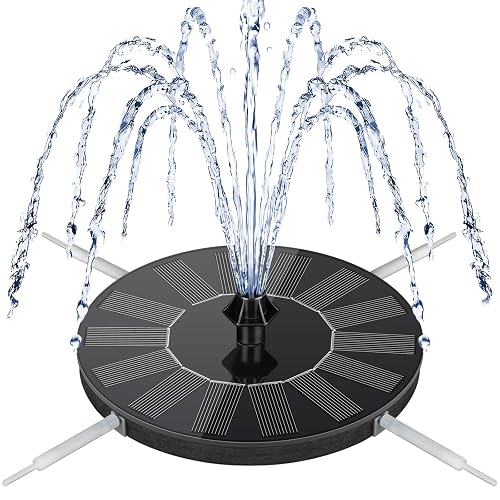
Solar models are popular during sales because they need no wiring. If you’re leaning that way, compare the options in 7 Best Outdoor Solar Garden Fountain Picks for Every Yard (2026) before you commit. For corded fountains, always plug into a GFCI-protected outlet and keep connections above standing water. If you’re unsure about wiring, consult a licensed electrician.
Step 3: Check the Pump and Flow Rate
The pump determines whether your fountain looks lively or sad. Sale listings often highlight the design and skip the pump details, so look for:
- Flow rate in gallons per hour (GPH): Small tabletop units typically run in the low hundreds of GPH. Larger outdoor fountains commonly list several hundred GPH or more.
- Maximum height: Manufacturers usually specify the spray height. Compare it to the fountain’s own height, since a spray that exceeds the basin by a lot will splash over the edges.
- Replaceable pump: A pump you can buy separately extends the fountain’s life considerably.
- Adjustable flow: A dial or valve lets you reduce splashing in windy spots.
Owners often report that undersized pumps cause dribbling streams and mineral crust, so pick a pump that suits the basin volume rather than the smallest one you can find.
Step 4: Evaluate Materials and Durability
Outdoor fountains face freeze-thaw cycles, UV exposure and algae. Material choice matters more than color when you’re comparing sale pieces:
- Resin: Lightweight and easy to move, with good UV resistance when labeled as outdoor-rated. Cheaper resin can crack in cold climates.
- Stone or cast stone: Heavy and stable, but it can stain and may crack if water freezes inside it. Drain it before winter.
- Metal: Durable and classic-looking. Check for powder coating or rust-resistant finishes, since bare steel rusts quickly.
- Ceramic or glazed terracotta: Attractive, but glazing can crack in freezing weather. Bring these indoors in cold regions.
Our overview of Top 5 Stone Fountains for Garden Settings Compared covers how stone holds up in different climates.
Step 5: Read the Sale Terms Carefully
A fountain outdoor garden sale often includes clearance items, floor models or seasonal leftovers. Before buying, check:
- Whether the pump, cord and any solar panel are included.
- The return window, particularly for clearance items sold as-is.
- Whether the warranty still applies to sale purchases.
- If the item has any visible damage, scratches or missing parts.
Set a reminder to inspect the fountain within 24 hours of delivery so any defects fall within the return window.
Step 6: Plan the Setup Before You Get Home
Sale fountains often ship in parts, and setup can be more involved than expected. Use this checklist to prepare:
- Choose a level, firm surface and mark its footprint.
- Confirm the power route or solar placement before unboxing.
- Gather a level, a bucket, a garden hose and a small brush.
- Read the manufacturer’s instructions; if you’re working from a sale model, our walkthrough on Garden Fountain Set Up: A Step-by-Step Guide for Beginners (2026) covers common steps.
- Fill the basin, run the pump for ten minutes, and check for leaks before final placement.
Common mistakes
- Buying on size alone. A tall fountain in a narrow bed can look awkward. Measure first.
- Ignoring the sun. Solar fountains in deep shade will run weakly or stop.
- Skipping the pump specs. Sale listings may hide flow details, so ask or check the manual.
- Leaving water in during winter. Freezing water cracks basins. Drain and store fountains in cold climates.
- Placing a fountain too far from power. Extension cords outdoors are a safety risk; plan the outlet route first.
Tips for getting the most from a sale
- Compare two or three similar models in person if you can, since photos flatten scale.
- Look for fountains with a removable pump and filter for easier cleaning.
- If you want a stylistic match, pair the fountain with complementary planting or lighting; see Outdoor Garden Lights for ideas that highlight water features at night.
- Set the fountain on a shallow gravel bed to reduce mosquito breeding and keep the base stable.
Recommended gear
- Submersible fountain pump replacement lets you swap out a worn pump instead of replacing the whole fountain. View on Amazon
- Outdoor GFCI extension cord adds protection when a corded fountain needs a longer power run. View on Amazon
- Fountain cleaning brush kit keeps nozzles and basins clear of algae and mineral buildup. View on Amazon
FAQ
Are sale outdoor fountains worth buying?
They can be, especially clearance models from reputable brands. Check the pump, materials, return policy and warranty before you buy, since the sale price alone doesn’t show durability.
Do solar garden fountains work on cloudy days?
They usually run more slowly or stop when light is weak. Many owners pair them with a small battery backup or accept reduced flow in winter months.
How often should I clean an outdoor fountain?
Most manufacturers recommend a basic rinse every one to two weeks during the warm season, with a fuller clean monthly. Adjust for leaves, pollen and local conditions.
Can I leave my fountain outside in winter?
Only if it’s rated for freezing temperatures and fully drained. In cold regions, drain the basin, remove the pump and store the fountain indoors or in a sheltered spot.
What size fountain is right for a small yard?
Choose a compact tiered or wall-style model with a footprint under about 18 inches. This keeps the feature in proportion with a small space.
Do I need a permit to install a garden fountain?
Usually not for a decorative fountain, but local rules vary and some areas regulate electrical work or water use. Check with your city or county, and consult a licensed electrician for any hardwired installation.
Why is my fountain pump making noise?
Noise often comes from low water levels, debris in the impeller or an air lock. Top up the basin, clean the pump intake and run it briefly to clear air.
Conclusion
A good fountain outdoor garden sale purchase comes down to matching the fountain to your space, power source and climate. Measure your site, check the pump specs and materials, and read the sale terms before you buy. With a little planning, a discounted fountain can become the focal point of your garden for many seasons.
Ready to choose one?
About Graham Fisher
Graham Fisher is part of our editorial team and reviews and edits our garden design & decor guides, checking product details against manufacturer specifications and owner feedback.