By Graham Fisher
Updated November 2026
A zen garden with fountain combines two elements that many designers pair on purpose: the dry, raked stillness of a karesansui (dry landscape) and the soft, steady sound of moving water. In this guide, you will plan the footprint, choose a fountain that suits the space, place stone and gravel with intent, and set up the water circuit so it stays quiet and reliable. By the end, you will have a practical blueprint you can build on a patio, side yard or courtyard.
Why Pair a Zen Garden With a Fountain?
A traditional zen garden is mostly about restraint. Raked gravel, a few carefully placed stones and open negative space do the work. Adding a fountain changes the emotional tone. Running water masks neighborhood noise, gives the eye a gentle point of motion, and makes the space feel occupied even when no one is sitting in it. The trick is to let the water be a supporting voice rather than a competing one.
Shopping for one? See our guide: 6 Best Solar Fountains for the Garden Picks for Every Yard (2026).
Designers usually treat the fountain as a vertical accent or a quiet pool beside the raked field. A compact, low-flow unit reads as calm. A tall, splashing unit reads as energetic, which can work in a larger yard but often crowds a small zen layout.
Step 1: Choose the Right Footprint and Location
Before buying anything, measure the area and decide how the garden will be viewed. Zen gardens are best seen from a bench, a doorway or a sitting spot, so orient the composition toward that viewpoint.
- Minimum practical footprint: about 6 by 8 feet for a single fountain and one raked field.
- Comfortable footprint: 8 by 10 feet or larger, which leaves room for a path and a bench.
- Choose a flat, well-drained site. Water pooling under gravel causes moss, odor and erosion.
- Keep the fountain within reach of a grounded electrical outlet or a solar panel with good sun exposure, depending on your power option.
Also think about wind. Light spray drifts easily, so position the fountain so prevailing breezes carry mist away from seating and from the raked gravel, which will clump if it stays damp.
Step 2: Pick a Fountain That Fits the Scale
Match the fountain height to the width of your garden. A rough rule many landscape designers use is that the tallest part of the fountain should sit around one-third to one-half of the garden’s shortest dimension. In an 8-foot-wide space, that points to a fountain roughly 2 to 4 feet tall, including the basin.
Consider the type of fountain:
- Stone or slate tiered fountains suit a traditional look and often sit well in a dry landscape setting.
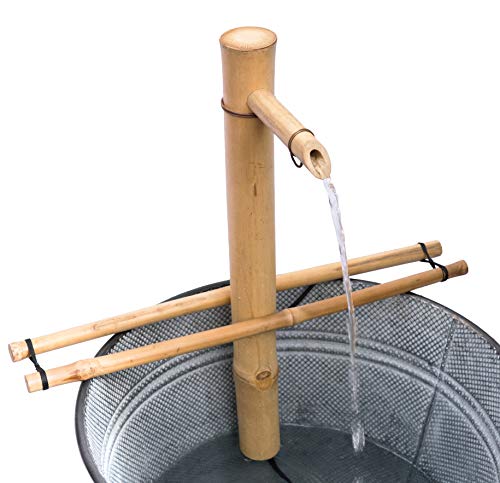
- Bamboo spout fountains add a Japanese character and produce a soft, periodic tapping sound. They fit naturally beside raked gravel.
- Low basin or pebble-bed fountains create a near-flush water surface that suits a minimalist layout.
For ideas on specific styles that fit this approach, see Top 5 Stone Fountains for Garden Settings Compared and 7 Best Zen Garden Bamboo Water Fountain Picks for Every Yard (2026).
Step 3: Plan the Power Source
Your power choice affects where you can place the fountain, so settle it early.
| Power option | Advantages | Limitations |
|---|---|---|
| Electric (plug-in pump) | Consistent flow, works in shade, easy to adjust | Needs a GFCI-protected outlet or a safe cord route; a qualified electrician should handle new outdoor circuits |
| Solar pump with battery | No wiring, flexible placement | Flow varies with sunlight; the pump may run weaker on cloudy days |
| Recirculating basin (submersible pump) | Simple DIY setup, self-contained | Needs regular top-ups and cleaning to prevent algae |
For electrical work, consult a licensed electrician. Water and mains power must be kept well apart, and outdoor outlets should be GFCI-protected.
Step 4: Lay Out the Raked Field and Stones
Now shape the dry landscape. The classic approach uses three layers: a base, a field and focal stones.
Set the Base and Edging
- Excavate the area about 3 to 4 inches deep.
- Lay landscape fabric to block weeds and keep fine gravel from sinking into soil.
- Install steel or stone edging to hold the gravel border.
Add the Gravel
Spread 2 to 3 inches of fine, pale gravel, ideally in the 1/8-inch to 3/8-inch range. Finer gravel rakes into clean lines more easily. Avoid colored or jagged aggregate, which looks busy under raking.
Place the Focal Stones
Use an odd number of stones, typically three, five or seven. Set the largest stone slightly off center, about one-third of the way across the field. Bury roughly one-third of each stone so it looks settled rather than placed. Angle smaller stones so their faces relate to the largest one, creating a visual conversation rather than a random scatter.
Rake the Pattern
Use a long-handled rake or a dedicated zen rake with tines spaced about 1/2 inch apart. Draw straight lines in one direction, or curve lines around stones to suggest ripples. Keep the pattern simple; complicated swirls distract from the water sound.
Step 5: Set Up the Fountain and Water Circuit
- Place the basin or reservoir first, leveling it with a spirit level on a compacted sand or gravel bed.
- Install the pump in the reservoir, following the manufacturer’s depth and clearance specifications.
- Route the tubing to the spout, keeping it hidden under stones or behind the fountain body.
- Run the pump for 15 to 20 minutes and check for leaks at every joint.
- Adjust the flow rate so the water falls gently. Heavy flow splashes gravel and creates noise.
If you are working with a reference guide for a specific product, the manufacturer’s instructions take priority. For example, Garden Treasures Fountain Instructions: A Step-by-Step Setup Guide shows how a typical setup sequence looks in practice.
Step 6: Add Plants and Finishing Touches
Keep plantings minimal. A few options work well:
- Moss clusters near the fountain base, where some moisture is expected.
- Japanese maple or dwarf pine as a single structural tree at the back edge.
- Ornamental grasses placed well outside the raked field to avoid debris.
- Low lighting, such as a small path light, for evening use.
If you want a compact version for a tighter corner, see Small Corner Garden Fountain: A Step-by-Step Guide to Planning One That Fits.
Step 7: Maintain Water Quality and the Raked Surface
A zen garden with fountain needs modest, regular care:
- Clean the pump intake and filter every 2 to 4 weeks during warm months.
- Top up the reservoir as it evaporates; never let the pump run dry.
- Change the water every few weeks, or add an algae-control product made for fountains.
- Rake the gravel weekly, and remove leaves promptly so they do not stain the surface.
- Drain and store the pump before freezing temperatures arrive in colder climates.
Recommended gear
A few tools make the build and upkeep easier:
- Zen rake with fine tines helps create crisp, even lines in the gravel. View on Amazon
- Landscape fabric roll keeps weeds down and gravel separated from soil. View on Amazon
- Fountain submersible pump with adjustable flow gives you control over the sound level. View on Amazon
- Rubber-tip spirit level ensures the basin sits level before you add water. View on Amazon
Common Mistakes to Avoid
- Overcrowding the field. Too many stones or plants break the sense of emptiness that defines the style.
- Choosing a fountain that is too tall. It overwhelms the gravel and makes the space feel cramped.
- Using loud, high-flow pumps. Gravel scatters and the sound becomes distracting.
- Skipping the fabric layer. Weeds and soil migration will ruin the raked lines within a season.
- Ignoring the viewpoint. Design for where you will sit, not for an aerial view.
- Placing electrical components too close to water. Keep connections dry and protected, and have new outdoor circuits installed by a licensed electrician.
Tips for a Lasting Design
- Use one dominant material, such as gravel plus slate, to keep the palette calm.
- Test the sound from your seating area before finalizing the flow rate.
- Plan storage for rakes and tools near the garden so upkeep is easy.
- Sketch the layout at 1/2-inch scale on graph paper to check spacing before you dig.
For more inspiration on how different fountain types fit into garden designs, browse Garden Ornament Water Fountain: A Step-by-Step Guide to Choosing and Placing One and Outdoor Garden Statue Fountain: A Designer's Step-by-Step Guide.
FAQ
How big should a zen garden with fountain be?
A practical minimum is about 6 by 8 feet. Eight by ten feet or larger gives enough room for the raked field, a fountain and a bench without feeling cramped.
What gravel works best for the raked surface?
Fine, pale gravel in the 1/8-inch to 3/8-inch range rakes most cleanly. Avoid large, jagged or brightly colored aggregate.
How often should I rake the gravel?
Weekly raking keeps lines crisp for most households. Rake after rain or leaf fall as needed.
Can I use a solar fountain for a zen garden?
Yes, though flow will vary with sunlight. A solar pump with a battery backup offers steadier operation. Solar options are covered in Top 5 Solar Powered Garden Fountain Picks for Every Yard (2026).
How do I keep algae out of the fountain basin?
Clean the pump filter regularly, change the water every few weeks, and use an algae-control product made for fountains. Keep the basin partly shaded if possible.
Do I need a permit to install an outdoor fountain with electrical power?
Requirements vary by location. Check with your local building department, and have any new outdoor electrical work done by a licensed electrician.
Will a fountain attract mosquitoes?
Moving water discourages mosquitoes, since they prefer still water to lay eggs. Keep the pump running and clean the basin to avoid stagnant areas.
Conclusion
A zen garden with fountain works best when each element has a clear job: the gravel creates stillness, the stones anchor the composition, and the water adds a soft, steady sound. Plan the footprint around your viewpoint, choose a fountain scaled to the space, and set up a quiet, reliable water circuit. With regular raking and basin care, the garden will keep its calm character for years.
Ready to choose one?
About Graham Fisher
Graham Fisher is part of our editorial team and reviews and edits our garden design & decor guides, checking product details against manufacturer specifications and owner feedback.