By Isabella Dawson
A small corner garden fountain can turn an underused angle of your yard into a focal point with moving water, soft sound and a sense of place. In this guide, you will learn how to measure the corner, choose a fountain scaled to it, plan the surrounding planting and set up a basic water and power supply. By the end, you will have a clear plan you can sketch on graph paper and build over a weekend.
Why a Corner Is a Good Spot for a Small Fountain
Corners often collect leftover space: the spot where a fence meets a house wall, the triangle beside a gate, or the nook behind a patio chair. Those edges already frame the view, so a fountain placed there has two solid backdrops and only needs to be seen from one or two sightlines. That makes a small fountain feel intentional rather than crowded.
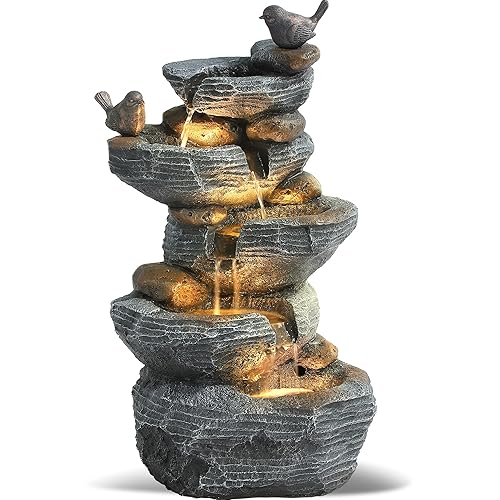
Shopping for one? See our guide: Top 9 Solar Fountains for the Garden Picks with Stacked Tiers and LED Light.
Corners also tend to be sheltered from wind, which helps keep spray from blowing onto furniture or paths. If you are working with a broader layout, the principles in Small Garden Layout Ideas will help you decide whether the corner should be the anchor of your design or a secondary accent.
Step 1: Measure and Map the Corner
Start with a tape measure and a notepad. Record the two wall or fence lengths that form the corner, then measure the diagonal from the back of the corner to the open edge where you would stand to view the fountain. This tells you how much visual depth you have.
- Note the length of each boundary running into the corner (for example, 6 feet along the fence and 8 feet along the house).
- Mark the clear floor space you can use. Leave at least 24 to 30 inches of walkable clearance around the fountain so people can reach it for maintenance.
- Check for hidden utilities: outdoor outlets, irrigation lines, gas lines and any downspout drainage that might run through the soil.
- Note sun exposure at morning, midday and late afternoon. Most fountain plants prefer at least six hours of direct sun, but the fountain itself does not need full sun.
Transfer these numbers onto a simple scale drawing, using 1 inch on paper for every 1 foot of yard. This quick sketch becomes the foundation for every decision that follows.
Step 2: Choose the Right Scale and Style
Scale matters more than most people expect. A fountain that is too tall will overwhelm a tight corner, and one that is too low will disappear against the fence. As a working rule, aim for the fountain’s total height to be between one-third and two-thirds of the height of the nearest wall or fence. Its footprint should leave the clearance noted above.
Style should follow the rest of your yard. Here are common approaches and how they suit a corner:
| Style | Typical look | Corner fit |
|---|---|---|
| Cottage | Tiered or pedestal basin, weathered stone or aged-look resin | Pairs well with climbing roses or clematis on the wall behind |
| Japanese | Low basin, bamboo spout or stone trough, simple lines | Works in a tight corner with moss, gravel and a single sculpted stone |
| Modern | Clean geometric basin, stainless or concrete finish | Strong against a plain wall, especially with a linear water spout |
| Mediterranean | Wall-mounted or tiled basin with a classic spout | Ideal when the corner backs onto a stucco or masonry wall |
For more ideas on pairing style with structure, see Mediterranean Garden Design and Minimalist Garden Design.
Wall-Mounted vs. Freestanding
A wall-mounted fountain uses the corner’s vertical surface and frees up floor space, which is ideal when the corner is narrower than about 3 feet. A freestanding fountain gives you more flexibility to move it later and works better when the corner is wide enough to allow a basin with a clear ring of gravel or pavers around it.
Step 3: Plan the Water Source and Power
Most small corner fountains are recirculating pumps, meaning a submersible pump draws water from a reservoir and sends it back to the top. You have two basic options for power.
- Electric with a GFCI outlet. Plug the pump into a ground-fault protected outlet, ideally one that is weatherproof and on a timer. Have a licensed electrician add an outlet if none is nearby; do not run extension cords across the yard.
- Solar with a battery or direct sun. Small solar pumps work well in full sun and are simpler to install. Output drops on cloudy days, so they suit decorative fountains rather than large splashing designs.
Confirm that the reservoir can hold enough water to keep the pump submerged at all times. Many small fountains have basins that hold only a few gallons, so they lose water quickly to evaporation on hot days. Plan to top up weekly in summer.
If you are unsure about wiring near water, consult a licensed electrician. Electrical work near moisture carries real shock risk.
Step 4: Build the Base and Set the Fountain
A level, stable base prevents tipping and keeps the pump from running dry. Follow these steps:
- Dig out a footprint slightly larger than the base, about 2 inches deeper than the basin’s bottom.
- Add 2 to 3 inches of compacted gravel and tamp it firmly.
- Set a level layer of sand or paver base, then place the basin. Check level in two directions.
- Fill with water, run the pump and confirm the spray pattern and water level before adding decorative stones.
- Route the power cord through a conduit or along a fence line, out of foot traffic.
Tools and Supplies Checklist
- Tape measure and string or stakes for layout
- Shovel, edging spade and tamper
- Gravel, sand and pavers or stepping stones
- Level (at least 24 inches long)
- Flexible tubing and a pump fitting for the spout
- GFCI-protected outlet or solar kit
- Gardening gloves and a bucket for water top-ups
Step 5: Plant and Style the Corner
Planting turns a fountain into a garden feature. In a corner, you can layer plants by height, placing taller specimens at the back and lower groundcovers at the front so the water stays visible.
Consider ornamental grasses for movement and texture. Ornamental Grasses in Garden Design covers several compact varieties that stay tidy at the base of a wall. For a finishing layer, a few river stones or a single sculpted piece can frame the basin. If you prefer statuary, Stone Garden Sculptures and Metal Garden Sculptures offer options that suit small footprints.
Use a restrained palette: two or three plant colors and one or two materials. Corners look most polished when they are not crowded. Leave some bare soil or mulch so the fountain has room to breathe.
Lighting and Sound
A small fountain looks different at night. A single low-voltage spot placed at the base, angled up, will catch the water and the surface of the basin. Keep fixtures out of the direct spray path. For ideas on fixtures and placement, see Outdoor Garden Lights.
Sound is part of the experience. Lower pump flow produces a quiet trickle, while higher flow creates a louder splash. Adjust the pump valve until the sound matches the spot. In a corner, the surrounding walls can amplify noise, so start with a gentle flow and increase it gradually.
Common Mistakes
- Choosing a fountain that is too big. Measure twice and leave clearance for people and maintenance.
- Ignoring evaporation. A shallow reservoir can run dry in hot weather and damage the pump.
- Skipping a level base. An uneven basin causes water to spill unevenly and can crack the material.
- Running extension cords. Use a proper outlet with ground-fault protection.
- Overplanting. Dense plants can block the spray and crowd the basin.
- Forgetting winter. Drain freestanding basins and remove pumps before freezing temperatures arrive, unless the manufacturer says the unit is rated for winter exposure.
Tips for a Better Result
- Place a mirror-finish stone or a glazed tile at the back of the basin to add reflection.
- Use a timer on the pump so it runs during daylight and evening hours, not overnight.
- Clean the pump screen every few weeks to prevent debris from blocking flow.
- Test the layout with a hose and a few chairs before you commit to the final placement.
- Check the local area around the fountain once a year for root encroachment or settling gravel.
Recommended gear
Several items help with the setup described here. Choose based on your power source and corner size.
- Submersible fountain pump with adjustable flow. A pump with a valve lets you tune the spray height and sound, which matters most in a small space. View on Amazon
- Solar fountain kit. A self-contained solar pump avoids the need for an outlet near the corner. View on Amazon
- GFCI outdoor extension or outlet cover. If you add power near the fountain, ground-fault protection is essential for safety. View on Amazon
- Pump screen filter. A replacement screen keeps debris out of the impeller and makes cleaning quicker. View on Amazon
FAQ
How much space does a small corner garden fountain need?
Most compact corner fountains occupy about 2 to 4 square feet of floor space. Allow an extra 24 to 30 inches of clearance around the basin for walking and maintenance.
Do small corner fountains need to run all day?
No. Many owners run them for a few hours in the morning and evening, which reduces evaporation and pump wear while still providing sound and movement.
Can I place a fountain against a wooden fence?
Yes, but keep the basin and splash zone a few inches away from the fence boards to limit moisture damage. Check that the fence is in good condition first.
How often should I clean the fountain?
Manufacturers commonly recommend cleaning the basin and pump screen every two to four weeks during the warm season, and emptying the basin for a deeper clean at the end of the season.
Will a small fountain attract mosquitoes?
Standing water can attract mosquitoes, but a moving fountain with a running pump generally discourages them. Keep the water moving and clean regularly to reduce the risk.
Can I use a fountain in winter?
Only if the unit is rated for winter use and the basin is protected from freezing. In most climates, draining and storing the pump is the safer choice.
Do I need a permit to install a garden fountain?
Most small decorative fountains do not require a permit, but electrical work and any changes near property lines may. Check with your local building department before adding new outlets or wiring.
Conclusion
A small corner garden fountain works because the corner already gives it structure and shelter. Measure the space, match the scale and style to your yard, and plan the power and base before you dig. With the right size and a few well-chosen plants, the corner becomes one of the most inviting spots in the garden.
Related reading
- Large Garden Fountain Statue Guide: Sizing, Placement & Setup (2026)
- Garden Treasures Fountain Parts: A Step-by-Step Guide to Repair and Replace
- Garden Heritage Garden Fountain: How to Choose, Site and Style One
- Garden Fountain Repair Parts: A Step-by-Step Guide to Fixing Yours
- Garden Fountain Algae Control: Why It Grows and How to Stop It
- Do It Yourself Garden Fountain: How to Build One That Lasts
Ready to choose one?

About Isabella Dawson
Isabella researches and writes buying guides and how-to articles on garden design & decor. Picks are based on product specifications, brand reputation and patterns in owner feedback, and are updated as new models come out.