By Weston Fitzgerald
Wrought iron garden decor can anchor a yard, frame a seating area or give a bare fence line real presence. By the end of this guide, you will know how to pick pieces that suit your garden’s style and scale, place them so they look intentional, and keep them rust-free for years. The process is mostly about planning proportion and finish, and it takes less effort than most people expect.
Why Wrought Iron Works in Garden Design
Wrought iron has a visual weight and linear detail that few other materials match. Its scrollwork, spirals and open lattice patterns read clearly from a distance, yet the open structure lets light and plants show through. That combination makes it useful in both formal and informal gardens. A simple iron trellis can soften a brick wall, while a bold scrolled panel can act as a backdrop for a fountain or a bench.
The material also has a long history in European and American landscapes, which is why it pairs well with traditional cottage gardens, Victorian-style plantings and classic courtyards. It works in modern designs too, especially when you choose clean geometric forms or powder-coated black finishes. If you are still deciding on a general look, our overview of Garden Ornaments covers how decorative pieces fit into different style families.
Step 1: Decide on Style and Color Before You Shop
Start by matching the iron to the architecture and planting palette you already have. Wrought iron comes in several finishes, and each one sets a different mood:
- Matte black: The most versatile choice. It recedes against foliage and works with almost any house color.
- Verdigris or bronze-toned paint: Suits Mediterranean and old-world gardens, especially with terra cotta and stone.
- White or cream: Lightens shady corners and pairs well with cottage roses and climbing vines.
- Raw or lightly aged iron: Gives a rustic, weathered look that suits woodland or farmhouse settings.
Once you have a finish in mind, check the rest of the garden’s color scheme. Our guide to Garden Color Schemes explains how dark accents can either ground a planting or disappear into it, which helps you decide how bold your iron should be.
Step 2: Choose the Right Type of Piece
Wrought iron decor falls into a few practical categories. Each one solves a different design problem.
Trellises and Garden Screens
Iron trellises support climbing roses, clematis and sweet peas while adding vertical interest. Freestanding screens can divide a yard into zones without blocking airflow. For a deeper look at dividing space, see Garden Screens and Garden Zoning.
Wall Panels and Wall Art
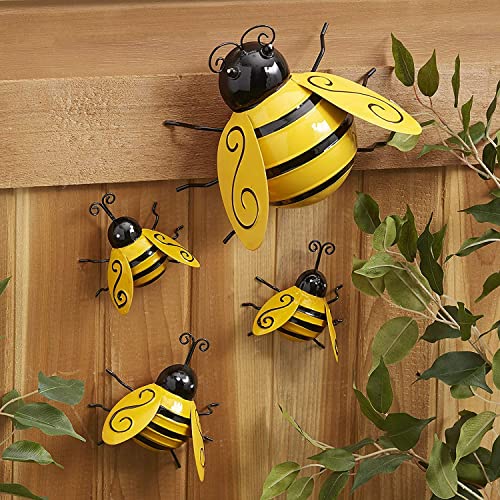
Wall-mounted scrollwork and sunburst motifs bring structure to bare fences and house walls. They work especially well in small spaces where floor area is limited. Our article on Garden Wall Art covers mounting approaches for different wall materials.
Benches, Chairs and Tables
Iron seating is durable and holds up to weather better than many woods, though cushions help comfort. These pieces become functional focal points, so place them where you actually want to sit.
Plant Stands, Obelisks and Planters
Tall obelisks add height to flowerbeds, and plant stands lift containers to eye level. Small iron pieces like these are easy to move, which makes them a good starting point for new gardeners.
Gates, Arbors and Edging
Arbors and gates mark transitions between spaces, such as a driveway and a front walk. Iron edging, usually sold in short lengths, defines beds with a crisp line.
Step 3: Match Scale to Your Space
Scale mistakes are the most common reason iron decor looks out of place. A rough guideline is to size a piece to the area it occupies, not to the largest space in the yard. Use the table below as a starting point.
| Garden Area | Suggested Piece Height | Good Choices |
|---|---|---|
| Small patio or balcony | 3 to 5 feet | Wall panel, small obelisk, bistro set |
| Average backyard bed | 4 to 6 feet | Arched trellis, plant stand group |
| Large lawn or border | 6 to 8 feet | Arbor, freestanding screen, tall obelisk |
| Entry walk | 5 to 7 feet | Gate, paired obelisks, arched arbor |
Also consider visual density. An open lattice reads lighter than a solid panel of the same height, so you can often use a larger open piece without overwhelming a small area.
Step 4: Plan Placement and Layout
Good placement follows a few simple principles. Place a tall piece at the back of a bed or on the edge of a seating area so it frames the view rather than blocking it. Group smaller pieces in odd numbers, such as three planters or a set of three stands, to create a natural rhythm. Leave at least 3 feet of walking clearance around benches and gates so people can move comfortably.
Think about sightlines from the house. Iron decor looks best when it is visible from a window or the main entry, and when it has a clear background, such as foliage, a wall or open sky. For tighter layouts, our guide to Small Garden Layout Ideas shows how to fit several pieces without crowding.
Lighting Iron Decor
Iron’s open patterns create strong shadows when lit from the side or below. A low-level uplight can turn a trellis into a silhouette at dusk. If you plan to add lighting, our article on Outdoor Garden Lights explains fixture types and wiring considerations.
Step 5: Install Securely
Tall or freestanding pieces need solid anchoring, especially in windy sites. For lightweight stands in beds, drive the legs or ground spikes into soil at least 8 to 12 inches deep, or secure them to a concrete base. Wall panels should be fastened into studs or masonry anchors rated for the panel’s weight. Always check the manufacturer’s weight limits before mounting.
Tools and Supplies Checklist
- Level and tape measure
- Drill with masonry and wood bits, as needed
- Appropriate wall anchors or ground stakes
- Exterior-grade screws or bolts (stainless or galvanized)
- Gravel or concrete mix for stable bases
- Rust-inhibiting primer and touch-up paint
Step 6: Protect Against Rust and Weather
Iron rusts when moisture and oxygen reach bare metal. Powder-coated and painted finishes slow this process, but scratches and chips still allow rust to start. Inspect pieces twice a year, sand any rust spots to bare metal, apply a rust-inhibiting primer, and finish with exterior-grade paint. Keep iron off direct soil contact where possible, since constant moisture speeds corrosion. Raising legs on small bricks or gravel helps drainage.
In coastal areas, salt air accelerates rust, so consider higher-grade coatings and more frequent checks. In very cold climates, avoid trapping snow and ice against the metal, which can crack older paint.
Recommended gear
A few supplies make maintenance and installation easier.
- Rust-inhibiting primer: Seals bare spots before topcoat paint goes on, which is the most important step in long-term rust control. View on Amazon
- Exterior metal paint: Formulated to resist UV and moisture, and available in matte black and bronze shades. View on Amazon
- Stainless steel ground anchors: Hold tall stands steady in soil without rusting through. View on Amazon
- Wire brush set: Removes flaking paint and surface rust before refinishing. View on Amazon
Common Mistakes
- Buying by picture alone: Measure the space first and mark its footprint with stakes or string.
- Ignoring the background: A dark iron piece against a dark fence can vanish, while the same piece against light siding stands out.
- Too many focal points: Two or three strong pieces read as intentional. Six compete for attention.
- Skipping the primer: Going straight to topcoat over scratched or rusty spots lets corrosion continue underneath.
- Placing heavy pieces on soft ground: Benches and tall obelisks can sink or tip without a gravel or concrete base.
Tips for Lasting Results
Repeat the iron finish somewhere else in the garden, such as on a gate or plant hangers, so the pieces feel connected. Pair iron with natural textures like stone, timber and grasses for contrast. Our article on Using Texture in Garden Design shows how mixed materials create depth. Finally, let climbing plants soften the metal over time, but keep vines pruned away from paint to prevent trapped moisture.
FAQ
Is wrought iron garden decor good for outdoor use?
Yes, as long as it has a rust-resistant finish such as powder coating or exterior paint and is maintained with periodic inspection and touch-ups.
What color of wrought iron works best in a small garden?
Matte black is the most versatile choice because it recedes visually and suits most house and planting colors. White or cream can brighten shady small spaces.
How do I stop wrought iron from rusting?
Sand any rust to bare metal, apply a rust-inhibiting primer, and finish with exterior-grade paint. Keep pieces off constantly wet soil and inspect them at least twice a year.
Can wrought iron be left outside in winter?
Most finished pieces can stay outdoors year-round. Clear snow and ice from detailed areas where possible, and check paint for cracks in spring.
How tall should a wrought iron trellis be?
Most backyard beds suit trellises between 4 and 6 feet tall. Larger lawns or borders can handle 6 to 8 feet without feeling oversized.
How do I anchor a tall iron piece in soft ground?
Use ground spikes or stakes driven at least 8 to 12 inches deep, or set the base in a small gravel or concrete footing. Check manufacturer weight and anchoring guidance before installation.
Does wrought iron work in modern gardens?
Yes. Clean geometric forms and black powder-coated finishes suit modern designs, especially when paired with concrete, gravel and simple planting.
Conclusion
Wrought iron garden decor rewards careful planning. Choose a finish that suits your color palette, match each piece to the scale of its space, and place it where it can be seen and supported. Protect the metal with primer and paint, and check it regularly. With those steps in place, your iron pieces will look intentional and hold up for many seasons.
Related reading
- Painted Garden Decor
- Wind Chimes for the Garden
- Using Texture in Garden Design
- Upcycled Garden Decorations
- Stone Garden Sculptures
- Small Garden Layout Ideas

About Weston Fitzgerald
Weston writes about garden design & decor. Each guide starts with research into how products are built and what owners report after months of use, and is revised when better options appear.