By Graham Fisher
Updated November 2026
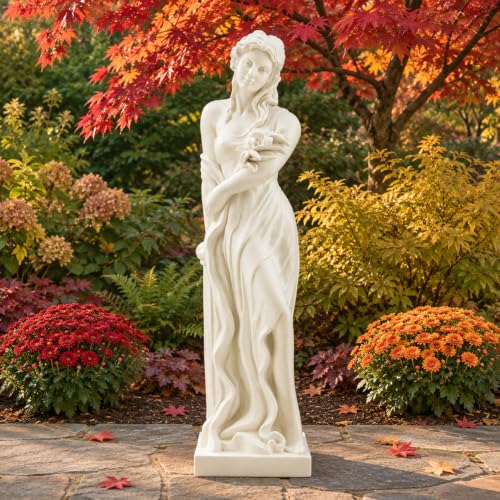
Garden statues with solar lights combine sculptural focal points with soft, self-powered illumination, so your yard looks finished after dark without any wiring. This guide walks you through choosing the right piece, placing it where the light actually works, and keeping it charged and handsome through the seasons. If you already have a statue, the placement and maintenance sections will help you get more glow from it.
Choose the Right Statue for the Light You Want
Not every statue suits a solar light. Look for pieces with a hollow or open form, a recessed base, or a design that lets light escape through eyes, a lantern, a bowl, or a cutout. Solid cast stone figures can still work if the light sits on top or on the base, but a figure with a light built into its hands or head tends to read as intentional rather than an afterthought.
Shopping for one? See our guide: 7 Best Solar Decor for Garden Pieces That Light Up Every Yard.
Think about scale too. A statue roughly 18 to 30 inches tall suits a flower bed or a small patio, while larger figures of 36 inches or more anchor a lawn or a long path. Match the size of the light to the statue so the glow doesn’t overpower the form.
Place the Statue Where the Light Will Show
Good placement does two jobs: it shows off the figure by day and puts the light where it will read at night. Set the statue where it is visible from a window, a seating area, or the main walkway. Avoid placing it in deep shade during the day, because the solar panel needs direct sun to charge.
Use this quick placement process:
- Walk the yard at midday and note where the sun hits for at least 6 hours.
- Choose a spot that also faces your main sightline from the house or patio.
- Place the statue on level ground, pressing the base firmly so it won’t tip in wind.
- Angle the solar panel, if separate, toward the south in the Northern Hemisphere or north in the Southern Hemisphere.
- Check the light at dusk and adjust by a few inches until the glow falls where you want it.
Set Up the Solar Light for Best Charging
Most solar statue lights charge during the day and run for several hours after dark. Many manufacturers specify a full charge after a day of direct sun, so the first night or two may be dimmer than expected. Keep the panel clear of soil, fallen leaves, and spray from sprinklers, since a film of grime can noticeably cut output.
Check whether the light has a switch, a dusk-to-dawn sensor, or a motion setting. Turn it on before the first full charge cycle and let it run to see how long it lasts in your location. Shorter runtimes often point to a spot that gets partial shade.
Maintain the Statue and the Light
Wipe the statue and the solar panel every few weeks with a soft cloth and mild soapy water. Rinse and dry thoroughly, especially on cast stone or resin, where residue can dull the finish. In winter, bring the light indoors if temperatures drop below what the manufacturer specifies, since cold can shorten battery life.
Replace rechargeable batteries when runtime drops noticeably, usually after a year or two of regular use. Keep spare batteries of the correct type on hand so you aren’t left with a dark statue.
Common Mistakes
- Placing the statue under a tree or eave where the panel gets only dappled sun.
- Expecting full brightness on the first night before the battery has charged.
- Setting a heavy statue on soft soil without a level base, so it sinks or tilts.
- Letting the solar panel stay dirty, which quietly cuts runtime.
- Mixing too many light colors and styles, which makes the display look cluttered.
Recommended Gear
A small set of tools makes setup and upkeep easier.
- A soft-bristle brush for cleaning solar panels without scratching them. View on Amazon
- A rubber-tipped level for checking that the statue base sits flat before you settle it into the ground. View on Amazon
- Replacement rechargeable batteries in the size your solar light uses, so you can swap them when runtime fades. View on Amazon
FAQ
How long does a solar statue light stay on each night?
Runtime depends on the battery, the brightness setting, and how much sun the panel gets. Manufacturers typically specify a range in their product details, so check that for your model.
Can I leave garden statues with solar lights out in winter?
Most are built for outdoor use, but very cold temperatures can shorten battery life. Check the manufacturer’s temperature guidance and bring the light indoors during extended freezes if needed.
Where should I place a solar statue if my yard is shady?
Choose a spot with at least a few hours of direct sun for the panel, even if the statue itself sits in shade. A separate solar panel on a short cable can help if the statue must stay in a darker area.
Conclusion
Garden statues with solar lights work best when you choose a piece with an open or hollow form, place it where it gets good sun and shows from your main viewing spots, and keep the panel clean. A little attention to charging and maintenance keeps the glow reliable season after season. Check your product’s manual for exact runtime and temperature details before you finalize your layout.
Related reading
- Light Up Garden Decor: 5 Best Solar Picks for Every Yard (2026)
- Garden Decor Solar Light: 5 Best Picks for Every Yard (2026)
- Best Solar Garden Lights
- Vintage Concrete Garden Statues: How to Choose, Place and Care for Them
Ready to choose one?
About Graham Fisher
Graham Fisher is part of our editorial team and reviews and edits our garden design & decor guides, checking product details against manufacturer specifications and owner feedback.