By Weston Fitzgerald
Garden and outdoor decor works best when every piece has a job: it anchors a view, frames a path, or gives the eye a place to rest. By the end of this guide, you will know how to pick a style, map your yard into zones, choose and place decorative elements, and avoid the mistakes that make outdoor spaces look cluttered. The method is simple enough to follow on a weekend, and flexible enough to suit a balcony or a half-acre lot.
Start With a Style Direction
Before buying a single ornament, decide what the space should feel like. Most successful gardens lean toward one dominant style, even if they borrow an accent or two from another. Cottage gardens favor soft curves, weathered materials and overflowing plantings. Japanese-influenced spaces rely on restraint, stone, water and clean lines. Modern gardens use simple geometry, repeated forms and a limited palette. If you are unsure which direction suits you, read through Japanese-Inspired Garden Design, Modern Garden Design and Mediterranean Garden Design to compare how each style handles structure and color.
Write down three adjectives that describe the mood you want, such as “calm, green, layered” or “bold, sculptural, bright.” Those words will guide every decision that follows and help you say no to pieces that look good in isolation but clash with the rest of the yard.
Map Your Outdoor Space Into Zones
A yard with no zones tends to look like a collection of leftovers. Divide it into functional areas first: a seating or entertaining zone, a transition zone near the house, a planting zone, and a utility or storage zone if you need one. Each zone can then carry its own decorative theme, and the decor stops competing for attention. The principles in Garden Zoning give a useful framework for drawing those boundaries.
Measure and Sketch
Draw a rough plan on graph paper at a scale of 1 inch to 4 feet. Mark the house, fences, existing trees, sun exposure (north, south, east, west) and any drainage problems. Note where you can see the garden from inside the house, since many people spend more time looking out than walking through.
Identify Your Focal Points
Every zone needs one primary focal point, the thing the eye lands on first. It might be a fountain, a sculpture, a tall planter or a wall piece. Secondary accents support it at lower height. For ideas on what to use, see Garden Focal Point Ideas and Garden Sculpture Ideas.
Choose Decorative Elements by Scale and Material
Scale is the most common reason outdoor decor fails. A 12-inch statue lost in a 30-foot bed looks like an afterthought, while a 6-foot piece in a small courtyard overwhelms it. As a rough rule, a focal piece should be about one-third the height of the nearest tall element, such as a fence, wall or mature shrub.
Material matters just as much. Outdoor pieces must handle rain, freeze-thaw cycles, UV exposure and humidity. Stone and cast concrete age gracefully. Metal can rust unless it is galvanized, powder-coated or made of a marine-grade alloy, and some owners prefer the patina of corten steel. Ceramic and terracotta are beautiful but may crack in hard freezes, so check the manufacturer’s freeze rating before you buy. Wood needs sealing or a naturally rot-resistant species such as cedar or teak.
| Material | Best Style Fit | Weather Notes | Maintenance |
|---|---|---|---|
| Natural stone | Japanese, modern, cottage | Very durable; some stones stain | Low; occasional rinse |
| Cast concrete | Modern, Mediterranean | Durable; can crack in hard freezes if unsealed | Low; seal every few years |
| Galvanized or powder-coated metal | Modern, industrial | Resists rust when coating is intact | Low; touch up chips |
| Corten steel | Modern, contemporary | Forms a stable rust layer | Very low; avoid soil contact on bare edges |
| Teak or cedar wood | Cottage, Japanese, rustic | Naturally rot-resistant | Moderate; oil or let silver |
| Glazed ceramic | Mediterranean, cottage | Check freeze rating; may crack in cold climates | Low; bring indoors in winter if unrated |
Mix Textures Deliberately
One material repeated in a few places creates rhythm; too many materials in one view create noise. A useful approach is to pick two dominant textures, such as rough stone and smooth glazed pottery, and add one contrasting accent. The guide to Using Texture in Garden Design explains how to balance rough and smooth surfaces so the space feels unified.
Place Garden Art and Ornaments With Intent
Art works best when it is seen from a specific vantage point, usually the main seat, the kitchen window or the entrance to a path. Stand at those spots and check what is visible. A piece that disappears from the view you use most is wasted.
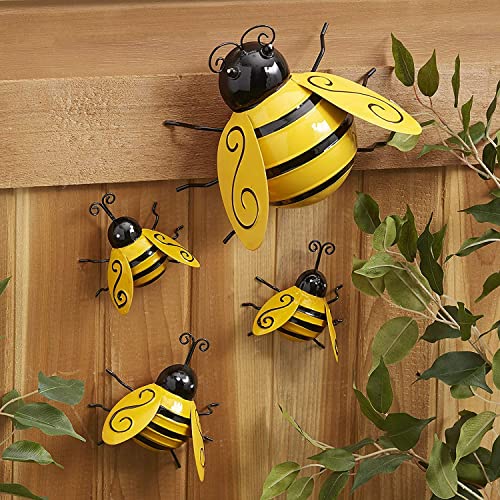
Use a few well-chosen ornaments instead of dozens of small ones. Odd numbers, such as three planters or five stones, tend to look more natural than pairs. Leave negative space around each piece so it has room to read. For wall-mounted options, Garden Wall Art covers mounting heights and sightlines, and Garden Ornaments offers ideas for smaller accents. Reflective pieces can add depth to shady corners; Garden Mirrors shows how to position them so they reflect plants rather than a neighbor’s fence.
Consider Height Layers
Build three levels: ground-level elements such as stones and low planters, mid-height features such as pots and small sculptures around 2 to 3 feet, and vertical accents such as trellis panels, screens or tall statues. Garden Screens is a good reference for the vertical layer, especially when you need privacy as well as decoration.
Plan Lighting and Water Features
Lighting extends the usefulness of outdoor decor after sunset. Uplight a sculpture or a tree trunk, add path lights at ground level for safety, and use low-glare fixtures near seating. Aim lights downward or shield them to avoid glare in neighbors’ windows. Options are reviewed in Outdoor Garden Lights.
Water adds sound and movement, which can make a small yard feel larger. A recirculating fountain needs a level base, a nearby outlet or a solar kit, and a water source for top-ups. Place it where its sound will reach the seating area but not dominate it. Best Outdoor Garden Fountains compares common fountain types and their placement needs.
Recommended gear
A few tools make installation easier and protect your investment.
- A level and stakes for leveling heavy pieces. Stone and concrete pieces shift if the base is uneven, and a small bubble level helps you check before you set them down. View on Amazon
- Solar path lights. They require no wiring and let you test positions before committing to a permanent circuit. View on Amazon
- A weatherproof outdoor extension cord with a GFCI outlet. Fountains and low-voltage lights need safe power, and a GFCI protects against shock near water. View on Amazon
- Penetrating sealer for concrete or stone. Sealing reduces staining and freeze damage. Follow the manufacturer’s instructions for coverage and drying time. View on Amazon
Common Mistakes
- Buying by the catalog photo. Pieces look larger or smaller outdoors than online. Mark the footprint with string or cardboard first.
- Scattering ornaments everywhere. Clusters of three to five pieces read as intentional; single items spread across the yard read as clutter.
- Ignoring sun and water. Some finishes fade in full sun, and items placed under a gutter downspout will collect splash marks.
- Forgetting the back view. Check how the space looks from the house, the driveway and the upper windows, not just from the patio.
- Mixing too many styles. Pick a dominant direction and let accents support it.
Tips for Lasting Results
- Begin with the largest element and work toward the smallest.
- Leave at least 18 inches of clear space around seating for comfortable movement.
- Rotate small decorative pieces seasonally to keep the space feeling fresh.
- Walk the space at dusk with your lighting on to check glare and shadows.
- Photograph the yard every few months to notice what has grown or faded.
FAQ
How many decorative pieces should a small garden have?
Most small gardens look best with three to five significant pieces, plus a few smaller accents. Too many items make the space feel crowded and reduce the impact of each one.
What is the best height for a garden focal point?
A focal piece usually works well at 3 to 5 feet tall in a typical bed or patio, though this depends on the surrounding plants and walls. Test the height with a temporary marker before buying.
Can I mix indoor and outdoor decor?
Yes, but choose pieces rated for outdoor conditions. Indoor materials such as untreated wood, paper or certain fabrics deteriorate quickly in rain, sun and humidity.
How do I keep metal garden art from rusting?
Choose galvanized, powder-coated or marine-grade metals, and touch up any chips in the finish promptly. Keep metal off constantly wet soil where possible.
Do outdoor ornaments need to be sealed?
Porous materials like concrete and some stones benefit from a penetrating sealer. Check the manufacturer’s care instructions, since some finishes should not be sealed.
What lighting works best for garden decor?
Low-voltage LED fixtures are common for accent lighting. Use uplights for sculptures and trees and downlights for paths, and shield fixtures to limit glare.
How often should I update my outdoor decor?
Many owners refresh small accents each season and reassess larger pieces every few years, depending on how the planting has matured.
Conclusion
Good garden and outdoor decor starts with a clear style, a sensible zone plan and a small number of well-scaled, durable pieces. Place each item where it can be seen from your main viewpoints, and use lighting and water to extend the space into the evening. Work slowly, check your sightlines often, and let the garden mature before adding more.

About Weston Fitzgerald
Weston writes about garden design & decor. Each guide starts with research into how products are built and what owners report after months of use, and is revised when better options appear.