
 By Graham Fisher
Updated November 2026
Planning a garden design with perennials takes more than picking pretty flowers. You need to know how plants grow in height and spread, how bloom times overlap, and how a bed looks in January as well as July. The books below focus on exactly those questions. They were selected on the basis of publisher reputation, the depth of their design content (layouts, planting plans, seasonal sequencing), and the consistency of owner feedback about how usable the guidance is at the planning stage. This is a research-based list, not a list of books we have personally used to build a garden.
Our top picks at a glance
- 1
 TOP CHOICEBest overallPerennial Garden DesignView on Amazon
- 2
 Best for planting combinationsThe Perennial Gardener's Design PrimerView on Amazon
- 3
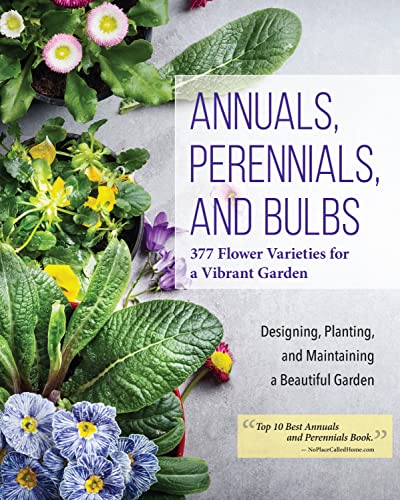 Best for visual plant selectionAnnuals, Perennials, and Bulbs: 377 Flower Varieties for a Vibrant GardenView on Amazon
- 4
 Best for step-by-step maintenanceHome Gardener's Perennials & Bulbs: The Complete Guide to Growing 58 FlowersView on Amazon
Our Top Picks
Quick Comparison
| Product | Best for | Key feature |
|---|---|---|
| Perennial Garden Design | Overall planning of perennial borders | Design-focused approach to layout and plant grouping |
| The Perennial Gardener’s Design Primer | Planting combinations | Guidance on pairing perennials by color, texture and season |
| Annuals, Perennials, and Bulbs: 377 Flower Varieties | Visual plant selection | Large photo library covering a wide range of flower varieties |
| Home Gardener’s Perennials & Bulbs | Step-by-step maintenance | Sequenced instructions for planting and upkeep of 58 flowers |
Perennial Garden Design
Perennial Garden Design
Best for: Overall planning of perennial borders from concept to layout.
This is the book to read first if you want to think like a designer. It focuses on how to structure a perennial bed, how to use repetition and drifts, and how to plan for height and spread so the border stays balanced. Readers who are still deciding between a formal and a naturalistic look tend to find its framework useful.
Key specs
- Subject: design principles for perennial beds
- Format: illustrated design guide with planting concepts
- Best applied to: new borders and renovations of existing beds
Pros
- Strong focus on layout and structure rather than plant catalogs alone
- Helpful for understanding repetition, drifts and sightlines
- Useful framework for deciding bed shape and depth
Cons
- Less detail on specific cultivars than a plant encyclopedia
- Regional adjustments are left for the reader to work out
Bottom line: Best for gardeners who want a solid design framework before choosing individual plants.
View on AmazonThe Perennial Gardener’s Design Primer
The Perennial Gardener's Design Primer
Best for: Planting combinations that work across the seasons.
This title is aimed at people who already know roughly what they want and need help putting plants together. It emphasizes pairing perennials by color, leaf texture and bloom timing, which is the part of garden design that often causes the most trouble for beginners.
Key specs
- Subject: perennial planting design and plant pairing
- Format: practical design primer with planting guidance
- Best applied to: mixed borders and sunny or shady beds
Pros
- Clear approach to combining plants by season and texture
- Practical for avoiding gaps in bloom time
- Good balance of design theory and planting advice
Cons
- Not as visually extensive as photo-heavy plant guides
- Assumes some basic familiarity with perennial growth habits
Bottom line: A strong choice for anyone stuck on which perennials belong together.
View on AmazonAnnuals, Perennials, and Bulbs: 377 Flower Varieties for a Vibrant Garden
Annuals, Perennials, and Bulbs: 377 Flower Varieties for a Vibrant Garden (Creative Homeowner) 600 Photos and Over 40 Step-by-Step Sequences to Help Design, Improve, & Maintain Your Landscape
Best for: Visual plant selection when you are still choosing what to grow.
This book works best as a reference you flip through with a notepad open. Its many photographs make it easy to compare flower forms, colors and habits side by side, which helps when you are sketching a planting plan.
Key specs
- Covers 377 flower varieties, as stated in the title
- Includes annuals, perennials and bulbs in one volume
- Photo-rich, with planting and maintenance sections
Pros
- Broad variety coverage in one book
- Photos make visual comparison quick
- Useful for mixing bulbs and perennials in one bed
Cons
- Breadth comes at the cost of depth on any single plant
- Perennials share the page space with annuals and bulbs
Bottom line: Ideal for gardeners who want a visual catalog to shape their plant palette.
View on AmazonHome Gardener’s Perennials & Bulbs: The Complete Guide to Growing 58 Flowers
Home Gardener's Perennials & Bulbs: The Complete Guide to Growing 58 Flowers in Your Backyard (Creative Homeowner) Step-by-Step Photos & Information to Design & Maintain Your Garden (Specialist Guide)
Best for: Step-by-step maintenance once the bed is in the ground.
This guide is oriented toward the practical work of growing and maintaining a perennial garden. Its step-by-step photography and sequenced instructions are useful for newer gardeners who want clear actions for planting, dividing and caring for their beds.
Key specs
- Covers 58 flowers in depth, as stated in the title
- Step-by-step photos and information for design and maintenance
- Part of a specialist guide series for home gardeners
Pros
- Clear, sequenced instructions for hands-on tasks
- Deeper coverage of each plant than a broad catalog
- Good for building a maintenance routine into your design
Cons
- Narrower plant range than broader flower encyclopedias
- Less focus on high-level layout theory
Bottom line: Best for gardeners who want to master the care of a well-chosen set of perennials.
View on AmazonBuying Guide
Design Theory vs. Plant Catalog
Decide early whether you need help with layout or with plant choices. Design-focused books teach you how to shape beds, repeat groupings and plan sightlines. Plant-focused books help you identify and select specific perennials. Many gardeners need both, so consider a combination if your budget and shelf space allow.
Good picks for this: Perennial Garden Design, Annuals, Perennials, and Bulbs
Bloom Sequencing and Seasonal Interest
A good perennial bed should look interesting in every season, not just peak summer. Look for books that address bloom timing, foliage color and winter structure. Planning for at least three seasons of interest is a common rule of thumb among designers.
Good picks for this: The Perennial Gardener’s Design Primer, Annuals, Perennials, and Bulbs
Plant Height and Spread
Check whether the book gives mature height and spread for each plant. Planting a 4-foot perennial in front of a 1-foot one is a common mistake that leads to shading and crowding. Reliable books give ranges and explain how to place tall plants at the back of a bed and low ones at the front.
Good picks for this: Perennial Garden Design, Home Gardener’s Perennials & Bulbs
Visual Reference Quality
If you learn best by looking, prioritize books with clear, well-lit photographs and labeled images. Photos that show plants at multiple stages of growth are especially helpful when you are judging how a perennial will look in your space.
Good picks for this: Annuals, Perennials, and Bulbs, Home Gardener’s Perennials & Bulbs
Matching the Book to Your Climate
Perennial performance depends heavily on hardiness zone, sun exposure and soil. Check whether the book notes zones or growing conditions. Where regional advice is limited, cross-reference with your local cooperative extension service before buying plants.
Good picks for this: The Perennial Gardener’s Design Primer, Perennial Garden Design
Step-by-Step Instructions
If you are planting a new bed for the first time, sequenced instructions for preparing soil, spacing, dividing and mulching can save a season of mistakes. Look for books that show the work, not just describe it.
Good picks for this: Home Gardener’s Perennials & Bulbs
Maintenance Demands
Some perennials need deadheading, staking or division every few years, while others are largely self-sufficient. A good design book will tell you which plants need more attention, so you can plan your bed around the time you actually have.
Good picks for this: Home Gardener’s Perennials & Bulbs, The Perennial Gardener’s Design Primer
FAQ
What should I look for in a garden design with perennials book?
Look for coverage of layout, plant height and spread, bloom sequencing and maintenance. A book that combines design principles with practical planting advice is usually more useful than one that covers only one of these.
Is a perennial design book useful for beginners?
Yes, especially books that explain basic concepts like repetition, drifts and seasonal interest. Beginners should prioritize step-by-step guidance and clear photography.
How many perennials should I include in one bed?
There is no fixed number, but many designers recommend grouping three to five plants of each type in a drift, then repeating those groups through the bed. This creates a cohesive look without making the bed feel cluttered.
Do perennial design books cover regional differences?
Coverage varies. Some books note hardiness zones, while others assume general conditions. Always check plant hardiness against your zone and consult a local extension office for region-specific advice.
How long does a perennial bed take to mature?
Many perennials take two to three seasons to fill in and reach their full form. Good design books account for this by showing how a bed looks in its first year and at maturity.
Should I plan a perennial bed around bloom times?
Yes. Overlapping bloom periods keep a bed interesting across the growing season. Plan for early spring, summer and fall interest, and include foliage plants that look good when nothing is blooming.
Can I combine perennials with other garden elements?
Absolutely. Many perennial beds pair well with grasses, shrubs, edging and hardscape features. For broader ideas, see Ornamental Grasses in Garden Design and Using Texture in Garden Design.
Conclusion
For a complete approach to garden design with perennials, Perennial Garden Design is the strongest starting point, since it focuses on layout and structure. If your main challenge is choosing plants that work together, The Perennial Gardener’s Design Primer is a practical companion. For visual plant selection, Annuals, Perennials, and Bulbs offers wide variety coverage. Home Gardener’s Perennials & Bulbs suits anyone who wants clear maintenance steps once the bed is planted. Many gardeners will get the most value from pairing a design-focused book with a plant-focused one.
For more planning ideas, see Cottage Garden Design and Flower Garden Design for Front of House: 7 Steps to a Curb-Appeal Border.
Sources
- Research-based guidance on perennial planting, site preparation and maintenance from university cooperative extension services (extension.org)
- Plant hardiness zone information to help match perennials to your climate (usda.gov)
- Native plant and pollinator-friendly planting resources for landscape design (nps.gov)
Related reading
About Graham Fisher
Graham Fisher is part of our editorial team and reviews and edits our garden design & decor guides, checking product details against manufacturer specifications and owner feedback.





